- China has courted developing countries to establish an AI cooperation organization. No Western developed country has joined, underscoring the "bipolarization" of global AI governance.
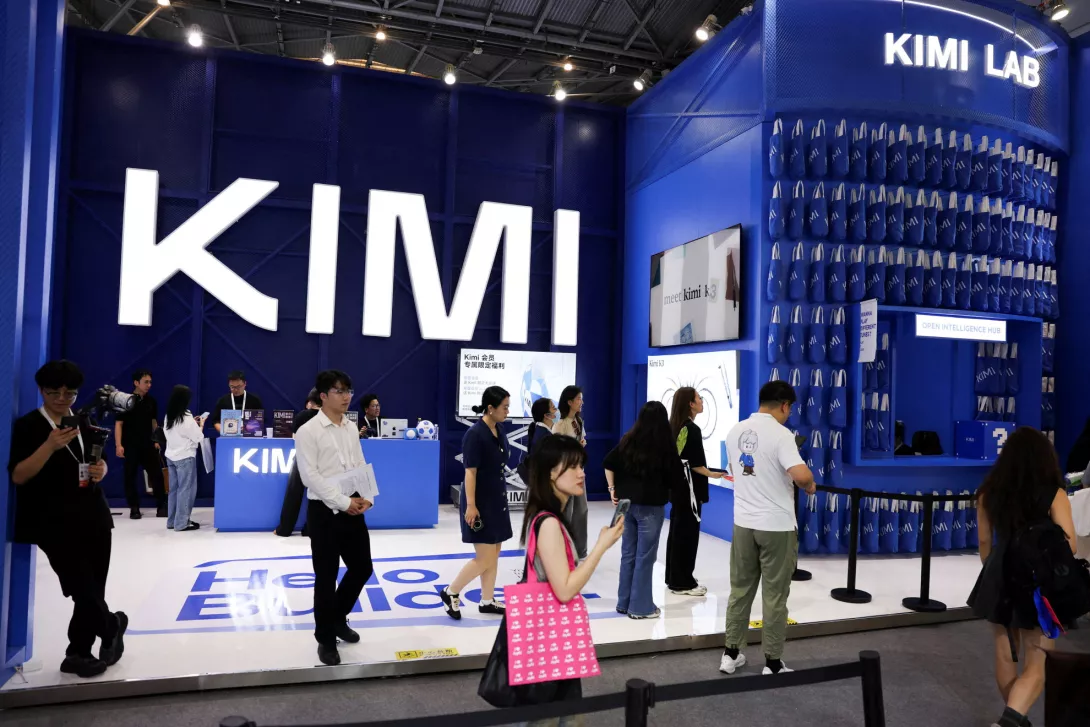
- Through open-source models, China is challenging the pricing power of U.S. AI giants. The launch of Kimi K3 has led Wall Street to believe that an AI price war may arrive sooner than expected.
- U.S.-China AI competition is no longer simply about whose models are more advanced, but about whose models become the default infrastructure for companies and governments worldwide.
The World Artificial Intelligence Conference and High-Level Meeting on Global AI Governance was held in Shanghai on July 17, with Chinese President Xi Jinping attending in person and delivering the keynote address. Reuters described the speech as Xi's clearest articulation to date of China's ambition to shape the global system of AI governance.
Xi also criticized the "overextension of the concept of national security," emphasized the need to "encourage open source and openness," and, through state media, promoted the principle of "resolutely opposing technological blockades." Outside observers widely see China as positioning "open source and inclusiveness" at the heart of its AI development strategy, in contrast to the closed-source ecosystem dominated by U.S. technology giants.
The "Bipolarization" of Global AI Governance
A day earlier, the World Artificial Intelligence Cooperation Organization (WAICO) had held its signing ceremony in Shanghai, with 29 countries joining as founding members. Whatever one's assessment of China's political system or model of technological development, these moves demonstrate that Beijing is no longer content to remain a follower in AI. It is actively seeking to shape the rules of global AI governance.
Notably, all 29 founding members are developing countries. The group includes no Western developed economy, nor any from North America, the European Union, Japan, or South Korea, underscoring the increasingly stark bipolar divide in global AI governance.
Founding Member States of World Artificial Intelligence Cooperation Organization (WAICO)
- Asia (13 countries): China, Russia, Kazakhstan, Uzbekistan, Tajikistan, Kyrgyzstan, Indonesia, Malaysia, Pakistan, Oman, Cambodia, Laos, Myanmar
- Africa (10 countries): South Africa, Ethiopia, Algeria, Kenya, Lesotho, Mozambique, Senegal, Zambia, Cameroon, Republic of the Congo
- Latin America (4 countries): Brazil, Venezuela, Cuba, Nicaragua
- Europe (1 country): Serbia
China has made the Global South the centerpiece of its strategy, offering technical assistance to countries that lack AI infrastructure and expertise. This approach overlaps with China's Belt and Road Initiative and BRICS partnerships, including Russia, Brazil, South Africa, Kazakhstan, and Indonesia, all countries with which Beijing has built long-standing strategic partnerships or regional economic and trade ties.
According to Chinese state media, more than 1,100 companies appeared at the conference, attendance exceeded 400,000 visits and intended procurement agreements surpassed RMB 20.3 billion. The exhibition resembled the "Canton Fair" of three decades ago, when China was expanding foreign trade. At an intersection outside the Shanghai exhibition hall, humanoid robots could be seen directing traffic; inside shops, robotic baristas handed customers iced Americanos. In the words of state media, "the entire city of Shanghai became an AI experience zone."
At the same time, Chinese startup Moonshot AI released Kimi K3, an open-weight large language model that prompted another round of discussion on Wall Street about a possible "DeepSeek moment." Unlike DeepSeek, a relatively small model with hundreds of billions of parameters, K3 has 2.8 trillion parameters and is designed for long-horizon coding, knowledge work, and agentic tasks. Although its benchmark performance still falls slightly short of that of the leading closed-source U.S. models, it has already drawn close to several of America's frontier models.
The sudden arrival of Kimi K3 once again touched a raw nerve in the United States. It appeared to be part of a coordinated series of moves by Beijing, demonstrating that Chinese AI developers continue to keep pace with their Western counterparts and that, despite U.S. export controls, Chinese AI scientists remain capable of training open-weight models with only a limited supply of advanced hardware.
At the same time, Anthropic, a leading U.S. frontier-model company, had previously alleged that Moonshot AI used fraudulent overseas accounts to carry out 3.4 million model-distillation interactions with Anthropic's systems. Chinese AI companies routinely employ techniques such as model distillation and execution-environment tool ecosystems to enhance model performance.
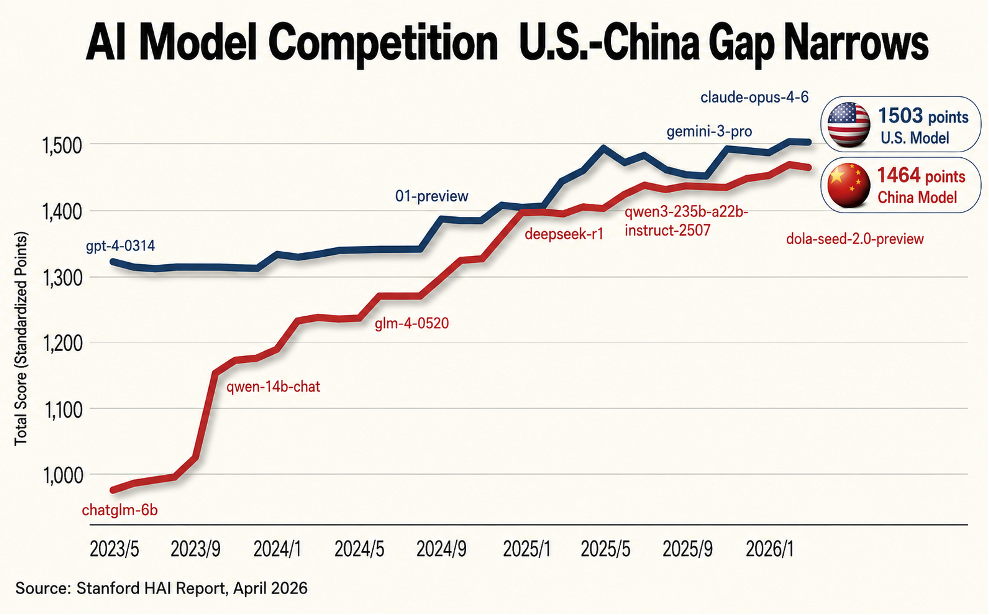
As early as April this year, another Chinese AI startup, Zhipu AI, released GLM-5.2, prompting Chinese state media to declare that the performance gap between Chinese and U.S. AI models had been "essentially eliminated." Stanford University's AI Index Report, also published in April, similarly estimated that the United States' lead over China in large language models had narrowed to approximately four months.
How China Is Breaking Through U.S. Controls
In 2025, the U.S. Department of Commerce extended export controls to cloud-computing capacity, model weights, and advanced algorithms. That same year, the United States intensified its scrutiny of Chinese students in "critical and emerging technology" fields and revoked visas for those pursuing science, technology, engineering, and mathematics degrees in sensitive areas. Washington also continued to restrict exports of advanced chips and semiconductor-manufacturing equipment to China.
Judging by the results so far, restrictions on semiconductor equipment have constrained China's ability to manufacture chips domestically at scale and at low cost, leaving its semiconductor technology largely stalled at the seven-nanometer level. Controls on advanced AI chips, however, have proved less effective: large numbers of chips continue to enter China through gray-market channels, while Chinese companies can also access high-end computing resources through overseas AI data centers.
The advances achieved by DeepSeek, Zhipu AI's GLM models, and Moonshot AI's Kimi K3 suggest that Washington's strategy of slowing Chinese companies' development of advanced AI capabilities has not succeeded in practice. Meanwhile, Beijing's retaliatory restrictions on exports of critical materials, including rare earths, have inflicted collateral damage on U.S. corporate supply chains.
Many assume that Kimi K3 was an overnight sensation. Yet although Moonshot AI was founded only three years ago, its founder, Yang Zhilin, has worked in AI for 15 years and is hardly a newcomer. In 2019, while pursuing his doctorate at Carnegie Mellon University, he co-authored the Transformer-XL and XLNet models. The former overcame key limitations in natural-language systems' ability to process long texts, while the latter briefly surpassed Google's then-dominant BERT model. Both papers remain important milestones in the development of large language models. Yang's credentials were not manufactured through startup branding. He studied computer science at Tsinghua University, earned a Ph.D. from Carnegie Mellon, and later worked at Google Brain and Meta AI. Talent of this caliber would be rare even in the United States. Science has no nationality, and the value of outstanding research does not change with a researcher's passport. What has change amid geopolitical conflict is the pressure on talented individuals to choose sides.
In reality, Chinese large-language-model companies are not so uniformly patriotic that they insist on using Huawei or other domestically produced chips. Their most advanced models were not trained on Huawei hardware. According to DigiTimes, many Chinese AI startups have located their training operations in ASEAN countries, where they use NVIDIA systems. Several Southeast Asian countries—including Malaysia and Vietnam, are not subject to U.S. sanctions and maintain friendly relations with China. Chinese firms may cooperate with local partners or use intermediaries to invest in AI infrastructure in these countries, then lease the computing capacity back to companies in China. In this way, they can circumvent both Beijing’s preference that Chinese companies avoid purchasing U.S. chips and Washington's restrictions on exporting advanced chips to China.
This is not merely a conspiracy theory. NVIDIA's financial reports show that Singapore accounted for more than 20 percent of the company's first-half revenue, more than Europe, Japan, and South Korea combined. Singapore's domestic demand for cloud computing and e-commerce alone cannot plausibly account for revenue on that scale, suggesting that many NVIDIA chips purchased through Singapore are ultimately shipped elsewhere. Supermicro was previously implicated in smuggling NVIDIA chips because its equipment was shipped directly to China, crossing a clear U.S. red line, rather than being routed through Vietnam, Thailand, or Malaysia.
One week after Kimi K3's release, White House Office of Science and Technology Policy Director Michael Kratsios said that the United States possessed intelligence indicating that Moonshot AI had distilled Anthropic's Fable model while developing K3. He also alleged that Moonshot AI had obtained servers equipped with NVIDIA GB300 chips in violation of U.S. restrictions and used them in Thailand. Whether Washington will extend its controls further into these gray areas therefore bears close watching.
Overall, the United States retains its lead in computing power, chips, top-tier talent, enterprise-application ecosystems, and the commercialization and monetization of AI. China's principal bottleneck remains physical computing capacity, making it difficult to scale deployment rapidly enough to meet rising demand. Kimi K3 attracted considerable attention upon its release, but within a week, Moonshot AI announced that it would stop accepting new users because it lacked sufficient inference capacity to serve additional customers.
At the same time, China's broader economy is slowing, and the country lacks financial markets capable of funding massive infrastructure projects such as AI data centers. Although China has a clear advantage in cultivating support across the Global South, and Chinese companies such as Huawei have built extensive information infrastructure throughout the developing world, these markets often lack the conditions necessary for deploying AI at scale. As a result, Chinese companies may struggle to generate substantial profits from them.
China's Open-Source Strategy Challenges the Pricing Power of U.S. AI Giants
In the past, a small number of U.S. technology giants dominated the AI-model market. Silicon Valley operated on two basic assumptions. First, developing the best artificial intelligence required the most expensive computing infrastructure, prompting companies to race to build data centers and train increasingly powerful closed-source models. Second, whoever controlled the most advanced large language models would gain pricing power, sustain high prices and profit margins over the long term, and attract the most capital.
Before Chinese open-source models began to emerge, model development largely resembled a computational arms race focused on optimizing ever-larger numbers of parameters. What Kimi K3 truly disrupted, however, was not the benchmark rankings. Rather, it was a match tossed onto a pile of doubts that had already accumulated in the market: if comparable model capabilities can be obtained more cheaply and openly, do users still need expensive frontier large language models? At the very least, lower-cost models can handle non-core tasks. Put simply, Chinese open-source models are not overturning U.S. technological superiority; they are eroding the pricing power of Silicon Valley's AI giants.
CNBC has highlighted a recent structural shift in the AI-token market: through aggressive pricing, Chinese AI models are rapidly gaining market share among U.S. developers and enterprises. This trend poses a serious challenge to leading U.S. model companies such as OpenAI and Anthropic. As enterprise customers become increasingly cost-conscious, U.S. AI companies must work harder to justify premium prices. Uber, for example, exhausted its entire annual token budget in the first four months of this year. Developers are increasingly asking: if a model can be self-hosted, why remain permanently dependent on a single provider?
Data from model-routing platforms such as OpenRouter and Vercel show that U.S. companies are adopting Chinese AI models such as DeepSeek and Z.ai at remarkable speed, largely because their operating costs are 60 to 90 percent lower than those of leading U.S. models. Chinese-developed models held an average market share of only 4.5 percent in the first half of 2025. Yet since February 8 of this year, Chinese models have accounted for more than 30 percent of U.S. enterprises' total weekly token usage. By June, their share had approached 60 percent, exceeding the combined share of all other U.S. open-source models.
The primary driver of this shift is neither politics nor ideology, but a straightforward price war. Consider the recently released Kimi K3. On Artificial Analysis's composite intelligence index, Kimi K3 scored 57, slightly below Anthropic's Claude Fable 5, which scored 60. Yet on a standardized basis, Kimi K3 costs approximately US$2.31 per million tokens—about 30 percent of Claude Fable 5's US$7.70.
Once enterprises realize that they can obtain most of the capabilities required for routine work at 30 percent of the price, the pricing power of leading U.S. model companies begins to erode. Companies can use Chinese open-source models for simpler tasks while paying a premium for advanced Claude or ChatGPT models only when confronting genuinely difficult problems.
The significance of Chinese open-source models for the AI industry therefore lies not necessarily in determining which model is the most powerful, but in reshaping how much the market is willing to pay for model capabilities.
Kimi's emergence has led Wall Street to conclude that the AI industry may enter a price war sooner than expected, contributing to sharp declines in AI-related stocks. Mainstream media once asked whether Chinese companies could build competitive models at all. The question now is whether companies are willing to adopt them. Even when enterprises ultimately choose OpenAI, Anthropic, or Google, the availability of credible Chinese open-source alternatives gives procurement departments greater leverage and makes it increasingly difficult for U.S. frontier-model companies to preserve their former pricing dominance.
In Industrial Competition, Beijing Uses the Same Playbook
If companies are asking why they should pay several times more when another model is already good enough, governments elsewhere will pose a parallel question: if they can build sovereign AI systems of their own, why should they entrust all their government, corporate, and citizen data to U.S. cloud platforms? This is the true strategic value of China's open-source models—and the political purpose behind Beijing's decision to host the World AI Conference in Shanghai.
China's open-source model strategy and the release of Kimi cannot be understood merely as competition among private startups. In its discourse on AI governance, the Chinese government repeatedly emphasizes openness, sharing, and support for the Global South in developing AI capacity. It presents open-source ecosystems, international cooperation, and localized deployment as central alternatives to closed U.S. platforms. At its core, this is a competition over the rules and standards that will govern AI.
From the Communist Party's strategic perspective, China must sustain the development of large language models even at a loss, because falling behind in the AI race would leave the country entirely dependent on the United States. Some Chinese companies developing large language models—such as Baidu, Tencent, and ByteDance—already generate substantial profits from their internet businesses. Others receive government subsidies and capital-market financing precisely because of their model-development programs. Their prospects therefore cannot be evaluated solely in commercial terms.
Open-source models are inherently difficult to monetize, while Chinese providers face higher AI-chip and computing costs than their U.S. counterparts, forcing them to rely on subsidies delivered through various government channels. Over the past two decades, China has used state support and low-price strategies to prevail in numerous industrial battles, including those involving petrochemicals, steel, flat-panel displays, LEDs, solar energy, and electric vehicles. The playbook has been nearly identical each time: Beijing expands capacity in favored industries regardless of actual demand; once overcapacity emerges, companies export products at low prices and force foreign competitors out of the market.
The core logic is simple: trade time and subsidies for market share, then raise prices once competitors have been pushed out. The same playbook may eventually be applied to AI. The cheaper a model becomes, the more widely it is adopted. The broader its adoption, the more tools and applications are built around it. And the more extensive the surrounding ecosystem becomes, the harder its models and standards are to displace. From the perspective of national industrial competition, if Chinese models are adopted by more developers, factories, robots, cloud platforms, and emerging economies, they could create a self-reinforcing cycle. U.S.-China competition in AI is therefore no longer about which model scores a few points higher on a benchmark. It is about whose models become the default infrastructure for companies and governments worldwide.
Peter Fenton, a partner at the prominent U.S. venture-capital firm Benchmark, has publicly predicted that within 18 to 24 months, open-source models will account for more than 90 percent of global AI-token output. Their proliferation would substantially delay the point at which U.S. closed-source model companies become profitable and would undermine U.S. efforts to control AI-token pricing. Moreover, neither other countries nor ordinary Americans strongly oppose China's current approach, because cheaper models offer substantial benefits to AI users. As model-service prices fall, cloud providers will also be forced to reduce the cost of computing and inference services. Data centers may remain busy and GPU utilization may stay high, but lower revenue per unit of computing power will lengthen the time needed to recoup infrastructure investments. In other words, full machines do not necessarily translate into profitable infrastructure.
Once Wall Street begins to question AI's long-term profitability, the sector's valuation boom will face a correction. Capital markets do not wait for a challenger to defeat an incumbent completely before adjusting valuations. The prospect of a broad repricing of AI assets is therefore Washington's deepest concern about China's low-cost AI strategy. Under these conditions, Washington is likely to impose further restrictions and oversight on Chinese companies' use of overseas cloud services and intensify enforcement against the smuggling of AI servers, thereby raising China's computing costs. At the same time, major U.S. model companies may be compelled to adjust their own open-source strategies in response to an escalating token price war.
Jensen Huang's Open Letter Warns Against a U.S. Retreat from Open Innovation
At this critical moment, NVIDIA founder Jensen Huang shared an open letter on July 24, signed by 25 technology companies, calling on the U.S. government to support open-weight AI models and warning that excessive regulation could erode America's competitive advantage in global AI. The post also marked Huang's first statement on social media. The letter argued that the United States has maintained its leadership in AI because of its longstanding commitment to open innovation. It called on the White House to:
- Support the continued development of open-weight AI models.
- Avoid overly restrictive regulations that could impede innovation.
- Preserve U.S. global leadership in AI technology, talent, and industrial ecosystems.
The signatories argued that open-weight models encourage research collaboration, accelerate technological progress, and lower barriers to development for startups and academic institutions. They also offer a means of responding to the challenge posed by low-cost Chinese open-source models. Huang's letter emphasized that if the United States restricts its own companies while other countries continue to develop open-source AI, it risks losing its technological lead. The real danger lies not in openness itself, but in allowing the United States to retreat from the competition over open innovation.
There is no need to be overly pessimistic about the rapid advancement of Chinese open-source models. China's development model has clear limitations. Open weights do not imply full transparency, nor do they eliminate concerns about political censorship, cybersecurity risks, or export restrictions. Developed countries will continue to scrutinize Chinese models closely, and in the short term, these models are likely to remain concentrated in the lower-priced segment of the market. China also continues to face significant technical bottlenecks in chips, software tools, and high-end computing ecosystems, making it difficult to overcome U.S. semiconductor restrictions in the near term.
The Cold War competition between the United States and the Soviet Union offers a useful comparison. When one competitor must expend several times the resources to reach the same technological benchmark, the eventual victor will be the side with greater long-term operational efficiency and economic strength. China's most serious vulnerability in AI ultimately remains its political system. Neither establishing the World Artificial Intelligence Cooperation Organization nor continuing to release new models can resolve that fundamental weakness.