- Japan–Philippines security cooperation has accelerated in recent years, but China's security threat, geographic considerations, and the two countries' respective alliances with the United States do not fully explain the depth of their relationship.
- Decades of cooperation through Official Development Assistance (ODA) have enabled Japan to establish a level of security cooperation with the Philippines that is difficult to replicate elsewhere in Southeast Asia.
- Japan–Philippines security cooperation extends beyond bilateral arrangements and is increasingly embedded in a broader network of overlapping multilateral security partnerships involving the United States, Australia, and other countries.
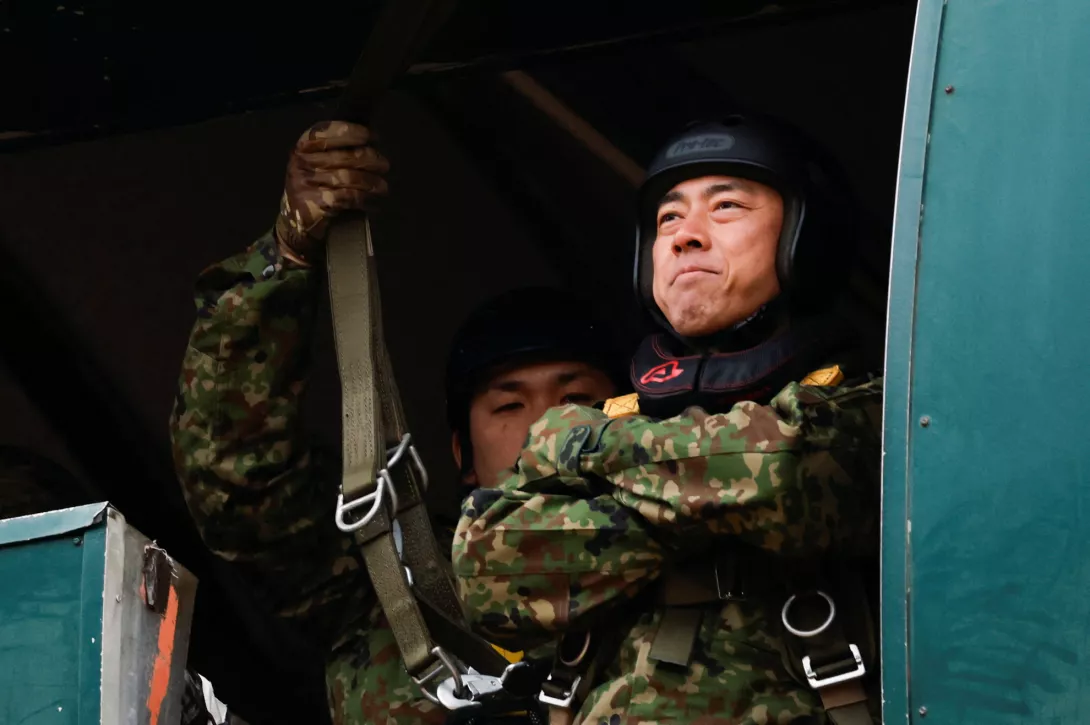
In recent years, security cooperation between Japan and the Philippines has deepened at an unprecedented pace.
The Japan–Philippines Reciprocal Access Agreement (RAA) entered into force in September 2025. In April 2026, Japan participated in the US–Philippines Balikatan joint military exercises with ground troops for the first time. The following month, Japan and the Philippines elevated their bilateral relationship to a Comprehensive Strategic Partnership, while the RAA began facilitating various joint exercises and training activities. The two countries also signed an Acquisition and Cross-Servicing Agreement (ACSA) in January 2026 and agreed in May to begin negotiations on a General Security of Military Information Agreement (GSOMIA). Barriers to security cooperation that once appeared difficult to overcome are gradually being dismantled.
Against this backdrop, a growing number of analysts have begun describing Japan–Philippines security cooperation as a "quasi-alliance." The term captures the increasingly close cooperation between the two countries in response to security pressures from China. However, it also implies a relatively fixed trajectory toward deeper security commitments, raising the question of whether closer cooperation will eventually lead to a formal military alliance.
Although Japan–Philippines security cooperation has deepened considerably, this does not necessarily mean that their mutual defense commitments have expanded accordingly. The two countries have no collective defense arrangement comparable to the US–Japan Security Treaty. Even as cooperation continues to grow, the establishment of a traditional military alliance between Japan and the Philippines remains highly unlikely in the foreseeable future.
If Japan and the Philippines are not formal allies, how should we understand their evolving security relationship?
Security Cooperation Is Driven by More Than the China Threat
The most common explanation for the deepening of Japan–Philippines security cooperation is the growing security threat posed by China.
In recent years, China's maritime military expansion and gray-zone activities have intensified. From Japan's perspective, the first island chain, the Bashi Channel, and the South China Sea have become interconnected strategic spaces. The Philippines, meanwhile, has long faced sustained Chinese military pressure in the South China Sea.
Although the threat from China has created incentives for neighboring countries to cooperate, it does not fully explain the particular characteristics of Japan–Philippines security cooperation. Why has Japan developed such extensive cooperation with the Philippines rather than with other potential partners? And why has this cooperation evolved gradually from capacity building toward more formal institutional agreements, rather than developing all at once?
The Philippines emerged as a potential security partner for Japan partly because of its geographic position and the existing US–Philippines and US–Japan alliances. Yet geography and alliance relationships explain only why the Philippines is a logical partner. They do not adequately explain why Japan has been able to establish such a deep level of security cooperation there. These conditions have existed since the Cold War. If they alone determined the depth of cooperation, Japan–Philippines security relations should have become highly institutionalized much earlier.
Understanding the current security relationship therefore requires examining the foundations of cooperation accumulated over several decades.
The 1956 Japan–Philippines Reparations Agreement marked the beginning of their postwar bilateral relationship. At the time, the Philippines received the largest amount of Japanese war reparations among Southeast Asian countries. In subsequent decades, bilateral engagement gradually expanded from reparations to Official Development Assistance (ODA), infrastructure investment, exchanges between government agencies, and personnel training. Between 1993 and 1997, Japan accounted for 57.6 percent of the bilateral ODA received by the Philippines. Even in 2022, Japan's share remained close to 30 percent.
This long history of engagement not only fostered mutual trust between the two countries' bureaucracies but also significantly lowered the institutional barriers to subsequent security cooperation. In the maritime security sector in particular, Japan has long used ODA to strengthen Philippine capabilities through vessel construction, equipment provision, and personnel training. These practical capacity-building efforts have allowed the two countries to deepen their security cooperation progressively by building on existing foundations.
In other words, geography and the US alliance structures explain the strategic importance of the Philippines, while decades of Japanese development assistance, which has consistently accounted for an exceptionally large share of the country's bilateral ODA, explain why Japan has been able to develop a level of security cooperation with the Philippines that few other Southeast Asian countries can match.
How Changes in Japanese Security Policy Shaped Bilateral Cooperation
In August 2025, a Chinese Coast Guard vessel accidentally collided with a People's Liberation Army Navy warship while pursuing a Philippine Coast Guard vessel near Scarborough Shoal. One detail of the incident received relatively little attention: the Philippine vessel involved, BRP Suluan, had been built and delivered by Japan with support from ODA.
The incident illustrates a defining feature of contemporary Japan–Philippines security cooperation. Japan's Maritime Self-Defense Force was not directly confronting Chinese warships on the front lines in the South China Sea. Yet Japan had already become deeply integrated into the Philippine maritime security system through vessels, personnel training, communications equipment, and maritime domain awareness capabilities.
Another important consideration is that the current pattern of cooperation emerged through a gradual process of historical development. In the postwar period, Japan's provision of security assistance abroad was constrained by constitutional interpretations, restrictions on arms transfers, and the nonmilitary principles governing ODA. Military assistance was therefore largely excluded from Japan's overseas assistance programs. Instead, Japan primarily supported partner countries through nonmilitary activities, including infrastructure development, coast guard capacity building, and government exchanges.
In 2014, the Japanese government introduced the Three Principles on Transfer of Defense Equipment and Technology, conditionally relaxing restrictions on defense equipment transfers for the first time. At the end of 2022, Japan revised its three key national security documents, identifying the strengthening of friendly countries' security capabilities as an instrument of national strategy.
In April 2023, Japan established its Official Security Assistance (OSA) framework, allowing the government for the first time to provide equipment directly to foreign armed forces through grant assistance. The Philippines was among the first recipients of the program, receiving coastal surveillance radar systems for its navy in November of that year.
The depth and scope of Japan–Philippines security cooperation have therefore expanded largely in accordance with the policy space created by Japan's gradual relaxation of its security restrictions. Cooperation evolved from ODA-funded coast guard capabilities and infrastructure development to the provision of security equipment under OSA, followed by more institutionalized arrangements such as the Reciprocal Access Agreement and the Acquisition and Cross-Servicing Agreement discussed earlier.
In short, the threat from China created the demand for greater Japan–Philippines security cooperation, while Japan's gradual policy liberalization determined the scope and form of cooperation possible at different stages. Together, these developments shaped the security relationship that exists today.
How Japan Has Sustained Cooperation Across Changes in Philippine Governments
Historical ties and Japan's evolving security policies help explain how Tokyo became so deeply involved in the Philippine security system. Another important question remains: How has Japan ensured that decades of accumulated cooperation would not be undone by changes in the Philippine government?
Explaining Japan–Philippines security cooperation primarily through the China factor can lead to an overly simplistic understanding of Philippine foreign policy as a choice between pro-American and pro-Chinese orientations. Under this interpretation, the pro-American stance of President Ferdinand Marcos Jr. has enabled rapid progress in bilateral security cooperation. Conversely, if a more Beijing-friendly administration emerges following the Philippine presidential election in 2028, existing cooperation could stagnate or even reverse.
However, the history of Japan–Philippines relations over the past decade offers a compelling counterexample.
After taking office in 2016, President Rodrigo Duterte initially distanced his administration from the United States and sought to improve relations with Beijing. If Japan–Philippines cooperation were merely an extension of the US–Philippines alliance, the Duterte presidency should have ushered in a period of strained bilateral relations. Instead, Japanese assistance to the Philippines continued throughout his administration, while the leaders of the two countries maintained a close personal relationship. The Philippines' shifting position between Washington and Beijing should have presented a major test for its relationship with Japan. Nevertheless, bilateral security cooperation continued to develop.
This experience demonstrates that although Philippine foreign policy may change considerably with each administration, Japan has pursued a highly pragmatic strategic objective: minimizing the possibility that bilateral cooperation will have to start over whenever political power changes hands.
Japan's approach to managing its relationship with the Philippines is reflected in three important dimensions.
Diversifying channels of cooperation. Philippine politics has long been influenced by local political families and regional power structures, while the president and vice president may belong to opposing political camps. Japan has therefore avoided concentrating its assistance exclusively in Manila or within the incumbent administration. Through ODA, Japan has developed extensive ties with local infrastructure projects, government agencies, and personnel exchanges, ensuring that bilateral cooperation does not depend entirely on a single government.
Institutionalizing cooperation mechanisms. In recent years, Japan has progressively transformed cooperation that previously depended heavily on political willingness into established institutional arrangements. These include the Japan–Philippines Reciprocal Access Agreement, the Acquisition and Cross-Servicing Agreement, bilateral 2+2 foreign and defense ministerial meetings, and the General Security of Military Information Agreement currently under negotiation.
Embedding cooperation in broader security networks. Japan–Philippines security cooperation is not confined to bilateral arrangements. Instead, it is increasingly integrated into an overlapping network of multilateral security partnerships involving the United States, Australia, and other countries. In April 2024, the leaders of the United States, Japan, and the Philippines held their first trilateral summit in Washington. Earlier that same month, naval vessels and military aircraft from the United States, Japan, the Philippines, and Australia conducted their first joint maritime patrol and exercises in the South China Sea. Even if changes in government produce short-term fluctuations in Japan–Philippines bilateral relations, these multilateral arrangements can provide continuity and help cushion the impact of political transitions.
Japan's strategic objective, therefore, is not to ensure that the Philippines maintains an unchanged foreign policy indefinitely. Rather, by diversifying its partnerships, institutionalizing cooperation, and embedding bilateral relations within broader security networks, Japan seeks to ensure that security cooperation can endure across political cycles.
Beyond Traditional Alliances: The Accumulation of Capabilities and Institutional Ties
This brings us back to the central question: If Japan and the Philippines are not moving toward a traditional military alliance, how should we understand the rapid deepening of their security cooperation in recent years?
A more accurate interpretation moves beyond the linear progression from partnership to quasi-alliance and ultimately to formal alliance. Instead, Japan–Philippines security cooperation should be understood as the transformation of a longstanding bilateral relationship into a deeper network of security capabilities and institutional linkages in response to changes in the regional security environment.
The threat from China has generated demand for closer security cooperation, but the distinctive character of today's Japan–Philippines relationship has been shaped by decades of accumulated engagement through postwar reparations, ODA, infrastructure development, maritime security cooperation, and institutional exchanges.
The Japan–Philippines case also offers an important perspective on security cooperation in the 21st century. Although the risk of full-scale war has not disappeared, contemporary security competition increasingly takes place outside conventional warfare, particularly through gray-zone operations, maritime law enforcement, and infrastructure-related activities. The depth of a bilateral security relationship should therefore be assessed not simply by whether the two countries have signed a mutual defense treaty, but also by the extent to which one country's capabilities and institutions have become embedded in the other's security system.
The Philippine Coast Guard vessel pursued by the Chinese Coast Guard near Scarborough Shoal in 2025 carried no Japanese mutual defense commitment. Yet the vessel itself, along with the equipment, personnel training, and institutional cooperation developed over many years, reflected Japan's sustained investment in strengthening Philippine security capabilities.
The security capabilities and institutional ties represented by that vessel may ultimately offer a more meaningful explanation of Japan–Philippines security cooperation than the term "quasi-alliance" ever could.