- Taiwan's rise as the world's leading semiconductor hub was not accidental, but the result of decades of strategic planning, trusted industrial ecosystems, and close integration with democratic partners.
- As artificial intelligence reshapes the global economy, Taiwan's semiconductor industry has become central not only to technological innovation, but also to the resilience and security of democratic supply chains.
- The next phase of Taiwan's transformation may depend on whether it can leverage its technological leadership to build globally competitive financial and investment capabilities capable of supporting a new era of industrial realignment.
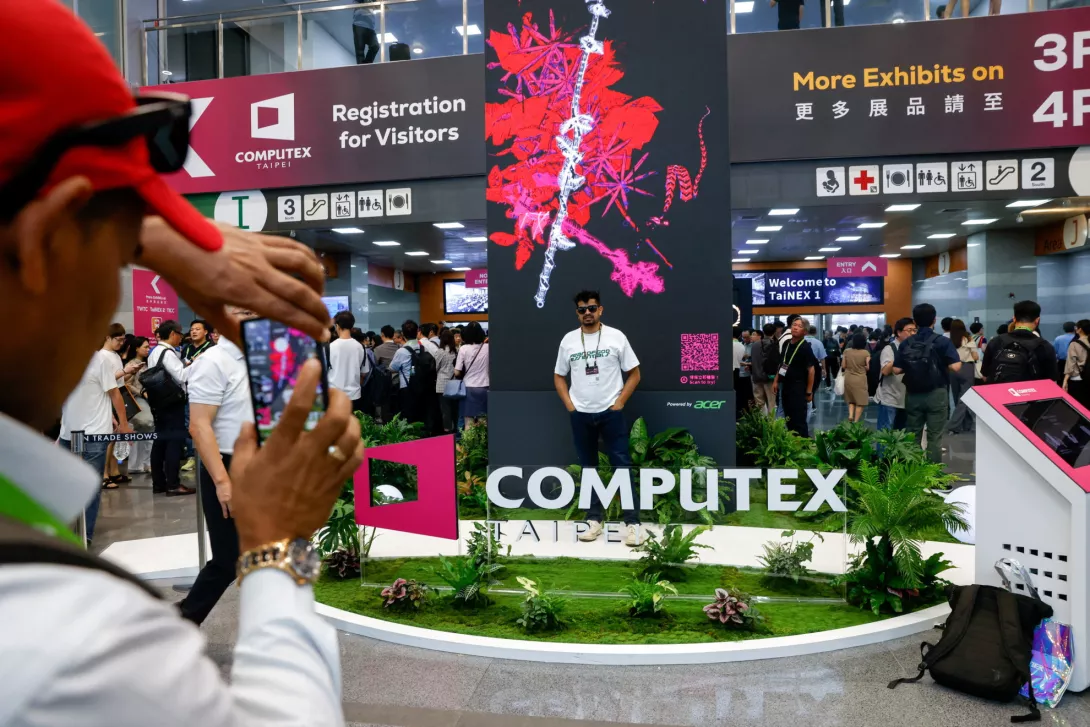
For two consecutive years, global technology leaders including Jensen Huang of Nvidia, Lisa Su of AMD, Lip-Bu Tan of Intel, Cristiano Amon of Qualcomm, and Rene Haas of Arm gathered in Taiwan for Computex Taipei, one of the world's most important technology exhibitions. Their presence reflected more than industry enthusiasm. It underscored Taiwan's central role in securing the manufacturing and research ecosystems that now underpin global technological innovation.
Today, Taiwan occupies a uniquely important position in the global high-tech economy. In the age of artificial intelligence, semiconductors have become not only commercial products, but strategic assets tied directly to economic competitiveness, national resilience, and geopolitical influence. Taiwan's rise to the center of this transformation was neither accidental nor sudden. It was the result of decades of strategic planning, institutional development, international cooperation, and industrial adaptation.
Taiwan's geographic position has long shaped its historical trajectory. Situated at the center of the Asia-Pacific, Taiwan lies between Northeast Asia and Southeast Asia, along one of the world's most important maritime trade routes. It also occupies a key position within the First Island Chain, giving it broader strategic significance in the Indo-Pacific security architecture.
For centuries, Taiwan's location made it a crossroads of regional commerce and international exchange. During the Japanese colonial period from 1895 to 1945, Taiwan underwent major infrastructure and industrial development, transforming from a predominantly agricultural economy into one increasingly centered on light industry. After World War II, Taiwan continued this process of industrialization with strong support from the United States, gradually building a market-oriented economy integrated into global trade networks.
In 1966, Taiwan established the world's first Export Processing Zone, leveraging its educated workforce and growing manufacturing base to serve as a production center for labor-intensive industries connected to the U.S. economy. This export-oriented development model helped generate rapid economic growth and laid the foundation for Taiwan's future industrial transformation.
Establishing a Complete ICT Industry Chain
By the 1980s, Taiwan began shifting its industrial strategy toward advanced technology development. Inspired in part by Silicon Valley, Taiwan established science parks designed to attract investment in high-tech industries and encourage overseas Taiwanese professionals to return home. Engineers and executives with experience at companies such as IBM, General Electric, and Texas Instruments became important contributors to Taiwan's technological development.
Taiwanese firms such as Acer and Asus capitalized on the global expansion of the personal computer industry following the rise of Microsoft Windows. Over time, Taiwan developed one of the world's most comprehensive information and communications technology ecosystems. By the early 2000s, Taiwan's ICT sector had become globally dominant in several product categories, including notebook computers.
At the same time, Taiwan was laying the groundwork for what would become its most strategically important industry: semiconductors. Taiwan introduced semiconductor technology through the RCA technology transfer agreement and subsequently invested heavily in developing domestic chip manufacturing capacity.
The establishment of TSMC in 1987 under the leadership of Morris Chang marked a historic turning point. Drawing on his experience at Texas Instruments, Chang pioneered the "pure foundry" model, under which TSMC manufactured chips for clients without competing directly against them. This model fundamentally reshaped the semiconductor industry.
Unlike vertically integrated firms that designed and produced their own chips, TSMC focused on building long-term trust with customers. Rather than competing against clients, it positioned itself as a trusted manufacturing partner. This approach helped attract a broad customer base, generated economies of scale, and accelerated technological advancement.
Semiconductor manufacturing depends upon extraordinarily complex international collaboration. Taiwan imports much of the advanced equipment and materials required for chip production from countries including the United States, Japan, Germany, and the Netherlands. The relationship between TSMC and the Dutch company ASML illustrates this deep interdependence particularly well. TSMC relies heavily on ASML's extreme ultraviolet lithography systems, while ASML benefits from TSMC's demand for increasingly advanced chipmaking capabilities. Today, a majority of ASML's EUV systems are deployed in TSMC facilities.
Taiwan's semiconductor ecosystem has become one of the most important drivers of global technological development. Chips manufactured in Taiwan power products ranging from smartphones and personal computers to automobiles, telecommunications systems, data centers, and advanced weapons systems. Semiconductor production is no longer merely an industrial activity; it has become a strategic industry essential to the modern global economy.
In 2025, Taiwan's combined ICT and semiconductor exports reached approximately US$474 billion, accounting for nearly three-quarters of the island's total exports. Taiwan-made products led the world in numerous high-value technology categories, reinforcing Taiwan's role as a critical technology hub.
Several factors help explain Taiwan's emergence as a leader in advanced technology.
First, Taiwan demonstrated strategic foresight in recognizing the long-term importance of semiconductors and high-tech manufacturing. Taiwan also benefited from structural changes in the global semiconductor industry, including the 1986 U.S.-Japan Semiconductor Agreement, which altered competitive dynamics and created opportunities for new entrants.
Second, TSMC's pure foundry model fostered trust-based industrial relationships rather than zero-sum competition. Trust became one of Taiwan's most valuable strategic assets.
Third, Taiwan invested consistently in research, development, and talent cultivation. Taiwan's educational system produced generations of highly skilled engineers and scientists who formed the backbone of the semiconductor industry. Today, Taiwan's IC sector employs hundreds of thousands of professionals and contributes substantially to Taiwan's GDP.
Fourth, Taiwan developed a highly integrated industrial ecosystem linking manufacturers, suppliers, clients, and research institutions. TSMC's close collaboration with suppliers such as ASML enabled rapid innovation and continuous process improvements, while decades of accumulated manufacturing experience helped Taiwan achieve world-leading production yields.
Finally, Taiwan's science parks created dense industrial clusters that facilitated collaboration, efficiency, and innovation. This ecosystem approach proved extremely difficult for competitors to replicate.
Through the cultivation of this broader technological ecology, Taiwan evolved into what many now describe as a "critical island" producing critical technologies for the world.
Taiwan's Strategic Position in the New Era of Geopolitics
When the U.S.-China trade conflict emerged in 2018, many initially viewed it primarily as a trade dispute. In reality, it represented something much larger: a strategic competition spanning technology, finance, trade, energy, industrial policy, and national security.
The COVID-19 pandemic and Russia's invasion of Ukraine further exposed the vulnerabilities of global supply chains. Governments and corporations increasingly recognized that excessive dependence on single-country manufacturing created major strategic risks.
As a result, the global economy is gradually moving away from an era of what might be called "simple globalization" toward a more security-conscious form of "rational globalization." In this emerging framework, resilience and security increasingly matter as much as efficiency and cost minimization.
The semiconductor industry sits at the center of this transformation.
Global disruptions during the pandemic severely affected industries worldwide, including the automotive sector. Yet Taiwan demonstrated remarkable supply chain resilience by helping stabilize the supply of automotive semiconductors during a period of acute global shortages.
Today, Taiwanese firms manufacture more than 60 percent of the world's semiconductors and over 90 percent of advanced chips used in cutting-edge AI applications.
Artificial intelligence is rapidly becoming one of the defining technologies of the twenty-first century. Its applications span finance, healthcare, cybersecurity, transportation, manufacturing, and national defense. As AI models grow increasingly sophisticated, demand for advanced computing power and high-performance semiconductors continues to accelerate.
For decades, the semiconductor industry expanded at a relatively steady pace. However, the rapid rise of AI has fundamentally altered this trajectory. Industry projections now suggest that the global semiconductor market could exceed US$1 trillion in the near future and potentially approach US$1.5 trillion by 2030.
This transformation represents far more than commercial growth. It reflects a profound shift in global economic and strategic priorities. Taiwan's leadership in advanced semiconductor manufacturing has therefore become central not only to technological innovation, but also to the future architecture of the global economy.
Rebalancing Trade, Finance, and Strategic Risk
Taiwan is actively positioning itself to meet the demands of the AI era while simultaneously strengthening the resilience of democratic supply chains.
Global technology companies including Nvidia, Microsoft, and Google continue expanding their partnerships and investments in Taiwan. At the same time, Taiwan is deepening cooperation with the United States, Japan, and Europe to build more secure and diversified supply networks among democratic partners.
TSMC's overseas expansion reflects this broader strategic realignment.
In the United States, TSMC is investing heavily in Arizona, where it plans to establish multiple fabrication plants with total investments reaching US$165 billion. In Japan, TSMC's investment in Kyushu has contributed to renewed momentum within Japan's semiconductor sector. In Europe, TSMC is constructing a fabrication facility in Dresden, reinforcing Europe's efforts to strengthen industrial resilience and technological sovereignty.
These investments are not isolated commercial decisions. They form part of a broader effort to rebalance trade, financial exposure, and strategic risk toward trusted democratic partners.
The results of this realignment are already visible. Taiwan's trade with the United States has increased significantly in recent years, while trade dependence on China has gradually declined. Financial exposure trends show a similar pattern, with Taiwanese institutions increasingly diversifying toward the United States, Japan, and Southeast Asia.
Taiwanese banks have also substantially reduced their exposure to China compared to a decade ago. This shift reflects a broader recognition that economic resilience and national security are becoming increasingly interconnected.
From Manufacturing Power to Financial Leadership
Beyond semiconductors and manufacturing, Taiwan now faces another strategic challenge: whether it can transform its financial sector to match its industrial strength.
This growing pressure for Taiwanese investment in the United States under emerging Taiwan-U.S. investment frameworks should not be viewed merely as an external burden. Properly leveraged, it could become a catalyst for Taiwan's broader financial transformation.
The United States is actively encouraging Asian allies and partners to invest in America through a combination of incentives and strategic pressure, including tariffs, trade-balancing measures, and industrial policy initiatives designed to establish future industrial clusters. Taiwan has become part of this broader restructuring effort through proposed bilateral investment arrangements reportedly involving as much as US$250 billion in Taiwanese corporate investment in the United States, alongside an additional US$250 billion in state-backed financial support mechanisms.
Taken together, these initiatives would exceed 30 percent of Taiwan's GDP. Such a scale represents far more than a simple relocation of manufacturing capacity or an effort to relieve domestic resource constraints. Rather, it constitutes a historic reallocation of capital, industrial networks, and financial influence.
Taiwan should seize this opportunity to elevate its financial sector from a largely traditional banking system into a globally integrated capital and investment platform capable of supporting large-scale international industrial expansion.
Taiwanese financial institutions should work alongside major American and international investment banks to develop global syndicated financing structures and sophisticated capital arrangements capable of supporting the expansion of cross-border supply chains. Such cooperation would not only help diversify high-tech production risks geographically, but also allow Taiwan's financial sector to move into higher-value strategic functions within the global economy.
There are important historical parallels. In the nineteenth century, the rise of American investment banking was closely tied to the financing of railroads and national industrial expansion. Taiwan may now be approaching a similar "digital railroad moment," in which the financing of advanced semiconductor facilities, AI infrastructure, and global supply chain networks could drive the modernization of Taiwan's financial system.
As future investment projects increasingly reach scales of US$10 billion or more, Taiwanese financial institutions would gain opportunities to evolve beyond conventional lending toward more sophisticated roles as capital planners and investment partners. Through participation in global syndicated lending, asset management, securitization, and complex refinancing structures, Taiwan's financial sector could gradually acquire the expertise necessary to become a more influential participant in international capital markets.
For Taiwan, the next phase of economic transformation may therefore depend not only on maintaining leadership in advanced technology manufacturing, but also on whether it can build the financial capabilities necessary to support and shape the next generation of global industrial networks.
Conclusion
Taiwan's transformation into a global technology and financial hub did not occur overnight. It was built over decades through openness to trade, long-term investment in education and innovation, institutional stability, and close cooperation with international partners.
Most importantly, Taiwan's success demonstrates the powerful relationship between democracy, free markets, and technological innovation. Taiwan's achievements did not emerge solely from engineering talent or manufacturing efficiency. They were also made possible by the rule of law, intellectual property protections, openness to international cooperation, and a business environment built on trust.
In the age of artificial intelligence, Taiwan's importance extends well beyond semiconductors alone. Taiwan represents a model of how democratic societies can foster innovation, resilience, and trusted technological ecosystems in an increasingly uncertain world.
As Arm CEO Rene Haas observed, Taiwan possesses "an amazing ecosystem." Nvidia CEO Jensen Huang similarly noted that Taiwan occupies a "central position" in the AI revolution.
Their comments capture a larger reality. Taiwan's role in the global economy is no longer simply about manufacturing capacity. It is about the ability of democratic societies to collaborate, innovate, and build trusted networks capable of sustaining the technologies that will shape the future.
At this critical moment, deeper cooperation among like-minded democracies will be essential not only for economic prosperity, but also for global stability and technological progress.
This article is adapted from remarks delivered at the Illinois Chamber of Commerce, April 2026 and the speech delivered at the 20th Annual Finance and Economic Policy Conference, May 2026.